Sim2Real, jobsite-ready
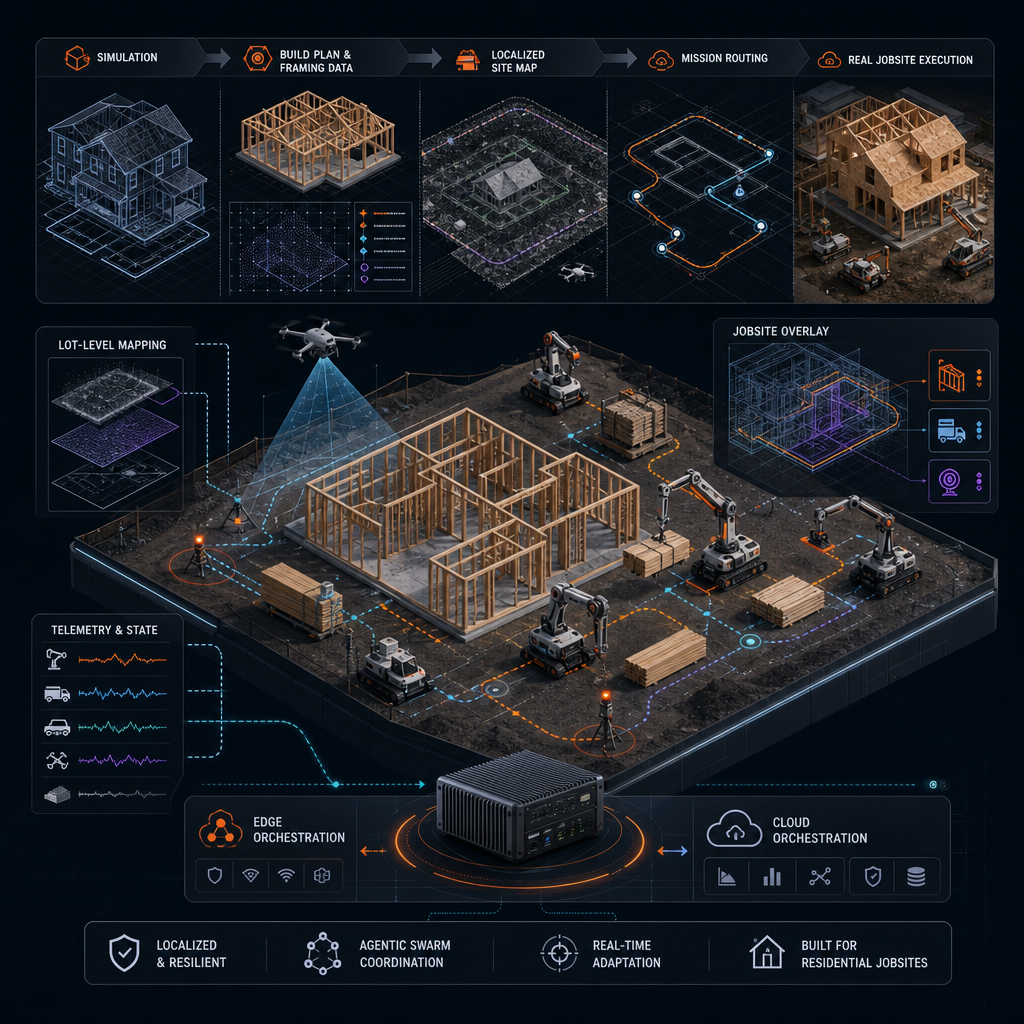
Workflows proven in simulation, deployed live. Cloud orchestration on AWS coordinates planning and fleet logic; edge agents handle navigation, computer vision, and execution on the ground.
Markland-Makato deploys hardened agentic swarms that go live fast, adapt to each lot, and keep crews moving. Built for production builders and contractors who need robotics that survives mud, schedule changes, and tight footprints—not lab conditions.
180+ days
Field-hardened runtime
<72 hrs
Pilot-to-site setup
99.99%
Task completion accuracy
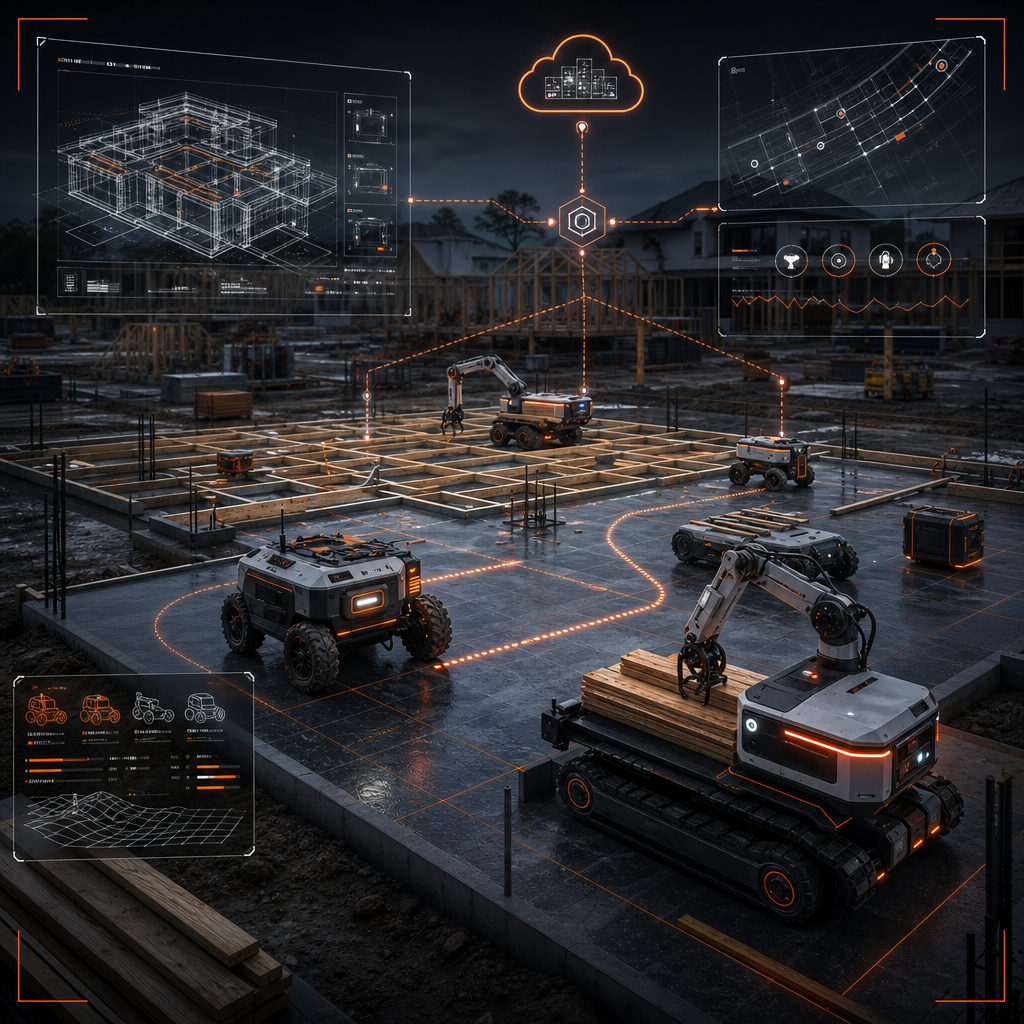
Integrated stack
Sensing • Planning • Execution
Operational fit
Crew-safe, site-adaptive
Core capabilities
Residential work is uneven terrain, shifting plans, and zero slack in the schedule. Our Sim2Real platform trains, validates, and deploys hardened robotic agents for that reality—so you can automate high-friction tasks without slowing the crew or rewriting how you run the site.
Workflows proven in simulation, deployed live. Cloud orchestration on AWS coordinates planning and fleet logic; edge agents handle navigation, computer vision, and execution on the ground.
Multi-agent control keeps work moving when a unit drops offline or supers reprioritize. Redundant 4G/5G, Starlink, or Amazon Leo connectivity across distributed locations.
Per-lot perception maps materials, grade changes, staging zones. Hardware/software tuned for challenging layouts, regional codes, builder standards.
NEMA 4X enclosures, rugged skid/wheeled platforms, dust-tolerant sensing for weather, unfinished surfaces, harsh conditions.
Orchestration syncs with scheduling, safety, procurement. Robots follow your sequencing and standards—not vendor workflows.
Dashboards track cycle time, tasks per shift, quality signals, ROI for weekly ops reviews.
Platform
Connects high-fidelity simulation with on-site autonomy—digital task plans into repeatable field execution. Hardened for tight lots, material changes, weather, daily schedule resets.
Project data flows digital twin to site-ready plans—less translation, less rework.
On-site re-planning when framing shifts, deliveries slip, crews reprioritize.
Task coordination across finishing, material handling, inspection—no single bottleneck.
Hardened edge controllers with offline continuity through connectivity gaps.
Reliability for contractors
Execution loop
Live telemetry flows back into simulation.
INDUSTRY IMPACT
Benchmarks vary by workflow and site conditions. These are areas where Sim2Real swarms typically create measurable lift for builders evaluating automation.
Deployment velocity
Shorter path from simulated planning to on-site execution
Quality control
More consistent execution, less costly rework downstream
Crew enablement
Robots do repetitive, precision-heavy work; Tradesmen execute high-judgment tasks
Site consistency
Standardized execution across crews, phases, communities
Deployment model
Small, purpose-built swarms deployed jobsite by jobsite—no full-fleet overhaul. Sim2Real training plus localized coordination gives each site autonomy where it matters (framing support, material handling, repetitive tasks) while crews retain sequencing and safety control.
Implementation flow
8–12 weeks typicalsite-specific Sim2Real model from build plan, constraints, crew cadence
roles, boundaries, handoffs mapped to subcontractor sequences
supervised pilot with safety checks and performance tuning
shared playbooks, dashboards, crew enablement across communities
Distributed, schedule-driven, highly variable builds. Localized swarms run with minimal central infrastructure; Sim2Real training keeps performance consistent across neighborhoods and crews.
Ready to evaluate a deployment plan for your next community?
Schedule an operational discussionFAQ
Concise guidance on Sim2Real deployment, safety, and platform engagement.